KIMS Mahadevapura, Boston Scientific Launches Illumina 3D Technology for Deep Brain Stimulation
According to the hospital, it is the first hospital in India to introduce the technology, which is designed to support more precise and personalized DBS programming.
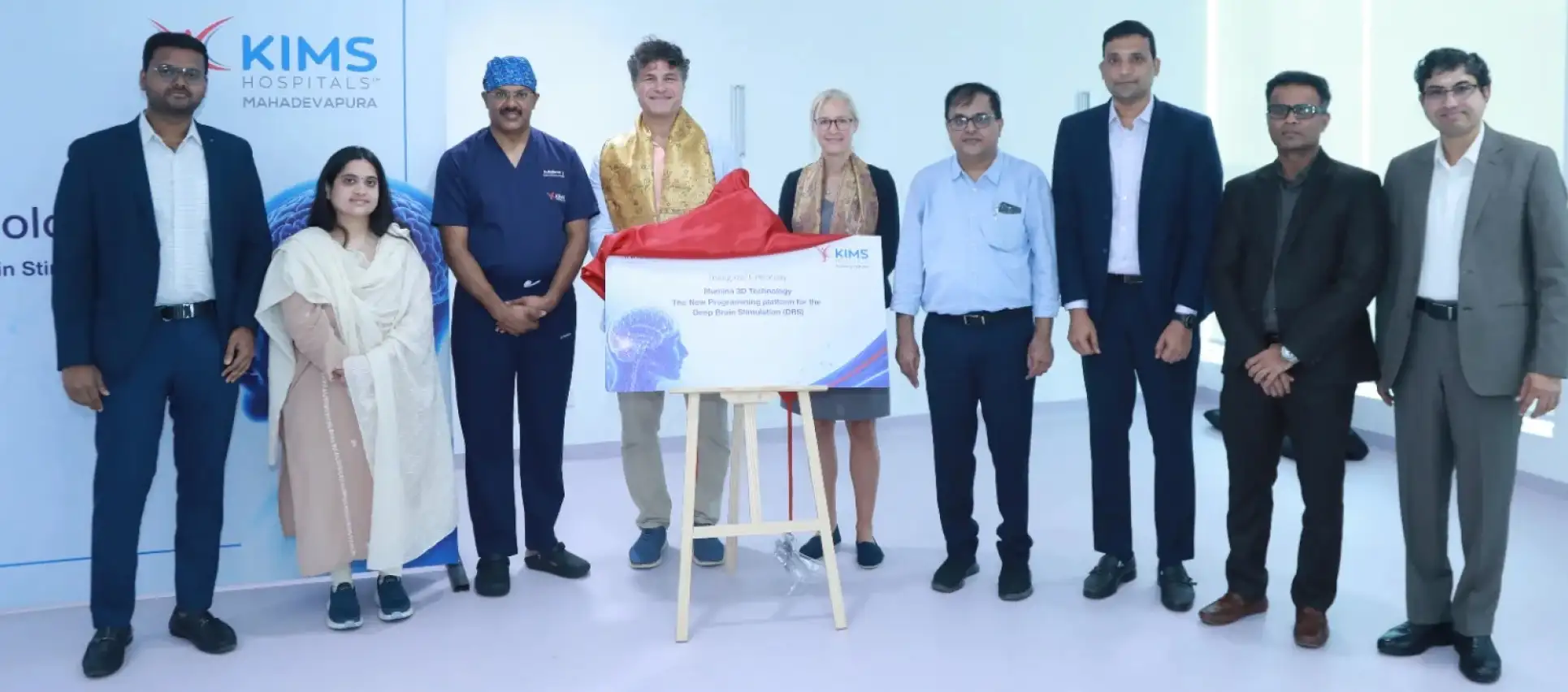
KIMS Hospitals, Mahadevapura, has launched Illumina 3D™, an image-guided programming platform for Deep Brain Stimulation (DBS), in collaboration with Boston Scientific. According to the hospital, it is the first hospital in India to introduce the technology, which is designed to support more precise and personalized DBS programming.
Illumina 3D™ combines medical imaging with intelligent algorithms to provide clinicians with an image-guided visualization of stimulation and its relationship with targeted brain structures. The platform is intended to help specialists develop and refine stimulation settings based on individual patient requirements.
DBS is used to manage movement disorders, including Parkinson’s disease, by delivering electrical stimulation to specific areas of the brain. Programming the stimulation parameters is an important part of DBS treatment, as settings may need to be adjusted according to a patient’s symptoms and response to therapy.
The newly introduced platform is designed to provide clinicians with additional information during the programming process, supporting a data-driven approach to treatment planning and therapy optimization.
The launch involved senior clinical leadership from KIMS Hospitals, including Dr. Guruprasad Hosurkar, Director and Lead Consultant in Neurology and Head of the Parkinson’s Disease and Movement Disorder Programme, and Dr. Raghuram Gopalakrishnan, Director and Senior Consultant and Head of Stereotactic and Functional Neurosurgery.
The technology will be used in the hospital’s neurological care services for patients undergoing DBS treatment for movement disorders.
The introduction comes as hospitals and neurology specialists increasingly use imaging and digital technologies to support neuromodulation procedures. Image-guided programming can provide clinicians with a visual representation of stimulation in relation to relevant brain structures, helping inform adjustments to DBS therapy.
Stay tuned for more such updates on Digital Health News
Follow us