


Karnataka Gov Announces K-HEAL to Advance HealthTech, MedTech & Assistive Technology Innovation
The proposed centre of excellence is intended to create a connection between clinical requirements and engineering capabilities, enabling innovators to develop solutions addressing gaps in healthcare delivery.
In a major push to advance technology-enabled infrastructure and the innovation ecosystem, the Karnataka government has announced six initiatives covering healthcare, artificial intelligence (AI), robotics, semiconductors, and deeptech.
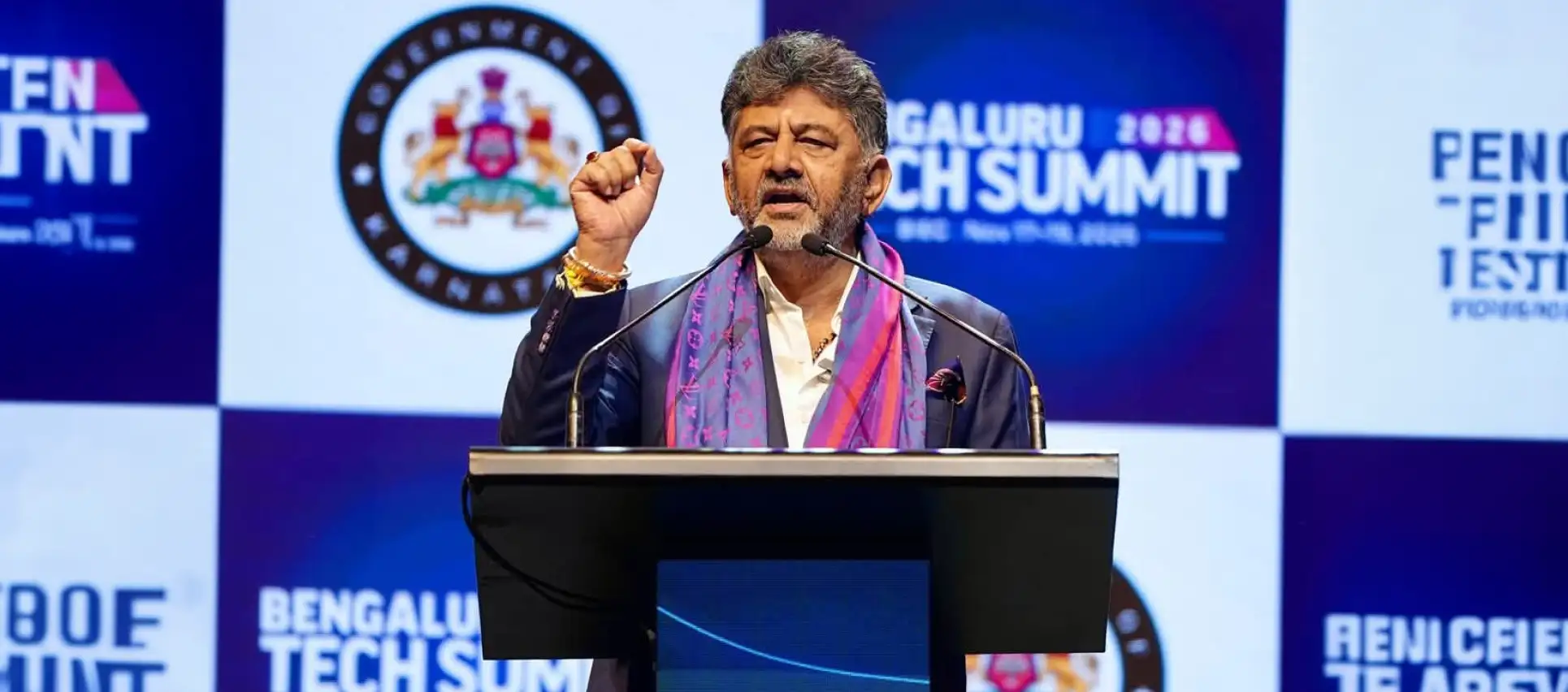
The initiatives were recently unveiled by Chief Minister DK Shivakumar at the Bengaluru Tech Summit 2026.
The announcements also include collaborations with academic institutions, research organisations, and technology companies to strengthen research infrastructure, industry partnerships, and talent development.
Major Healthcare & Technology Initiatives
Among the healthcare-focused initiatives announced by CM is K-HEAL (Karnataka Health Engineering & Advanced Lifesciences), a proposed Centre of Excellence aimed at strengthening the state's HealthTech, MedTech and Assistive Technology ecosystem.
A flagship initiative under the Department of Electronics, Information Technology and Biotechnology, K-HEAL will bring together clinicians, researchers, industry players and startups to accelerate the development and adoption of healthcare innovations.
It seeks to identify unmet healthcare needs, develop and validate innovative solutions, and support their adoption.
Further, its priorities include promoting accessible, affordable, and globally competitive healthcare technologies.
The proposed centre of excellence is intended to create a connection between clinical requirements and engineering capabilities, enabling innovators to develop solutions addressing gaps in healthcare delivery.
By facilitating collaboration among healthcare institutions, research organisations, technology companies and startups, K-HEAL is expected to support the translation of research and innovation into market-ready products and solutions.
The state has also announced BRAINZ (Bengaluru Robotics & AI Innovation Zone), a proposed nine-acre robotics, AI and deeptech hub being developed in collaboration with ARTPARK at the Indian Institute of Science (IISc).
The facility aims to bring startups, research institutions, and industry together to accelerate the development of indigenous technologies and real-world applications. It aims to catalyse investments of INR 1,000 crore over five years.
Alongside this, the government established the Karnataka AI Hub at IIIT-Bangalore as an initial step towards its proposed AI University.
The hub will focus on artificial intelligence research, skilling, entrepreneurship, and capacity building to translate research into real-world applications.
The proposed AI capabilities are expected to create opportunities for applications across healthcare and life sciences, including clinical decision support, diagnostics, healthcare data analytics and research, although these are not specified as dedicated programme deliverables in the announcement.
In addition, Karnataka highlighted two semiconductor research initiatives at IISc Bengaluru, including the 2D Innovation Hub, featuring a 200-mm fabrication and pilot-line facility, and INFI Fab, focused on advanced semiconductor technologies, including MEMS, photonics, quantum technologies and advanced packaging.
Further, the government has also introduced the Innoverse Foundation ecosystem to support Karnataka’s deeptech startups in scaling proven technologies, with a focus on autonomous systems and applications across underwater and space sectors.
Alongside research infrastructure, the Karnataka government is strengthening industry partnerships to develop a future-ready technology workforce.
The initiative aims to provide emerging AI technology training to 63,200 engineering and diploma students and professionals. To strengthen industry partnerships, the state has inked an MoU with five technology companies, including Google, Salesforce, Pega Systems, Sarvam AI and Gnani.ai.
The proposed collaborations will introduce specialised training programmes covering generative AI, agentic AI, AI agent development, Voice AI, enterprise platforms, cloud computing, data analytics and Responsible AI.
Stay tuned for more such updates on Digital Health News
Follow us