


Beyond Connectivity: The Digital Healthcare Divide within Indian Cities
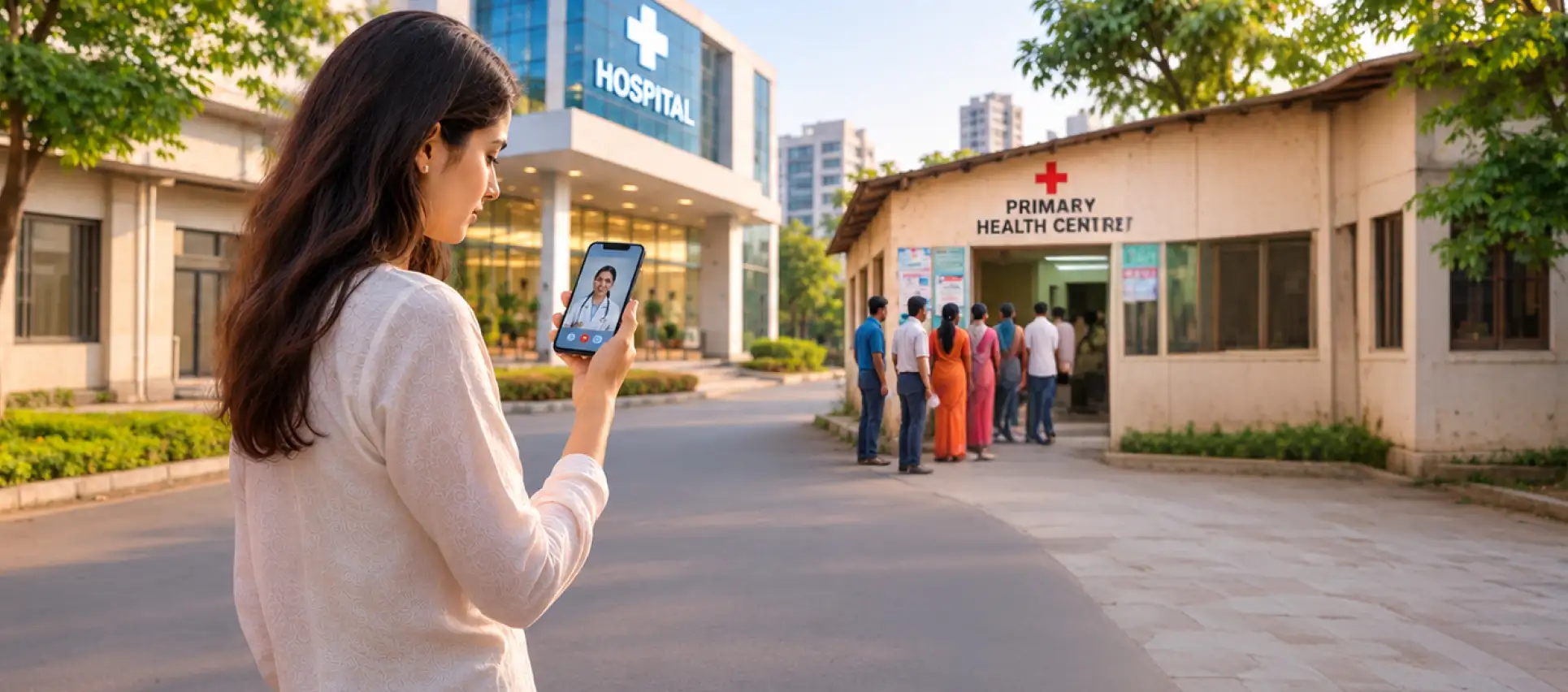
A city may have some of India's most advanced hospitals, extensive broadband connectivity, digital payment infrastructure and growing telemedicine networks. Yet, within the same urban boundaries, a woman in an informal settlement may depend on a family member's smartphone to access a medical appointment, an elderly resident may struggle to navigate an online consultation, and a migrant worker may find it difficult to use a digital health platform because of language or documentation barriers. The contrast exposes an important dimension of India's digital health transformation: access to technology does not necessarily translate into access to digital healthcare.
India's urban health landscape is often discussed through the contrast between cities and rural areas. However, this framing overlooks inequalities that exist within cities themselves. Affluent neighbourhoods, commercial districts and well-served residential areas may have access to digitally enabled hospitals and private healthcare networks, while low-income settlements and underserved urban communities continue to face gaps in infrastructure, affordability, digital literacy and access to nearby health facilities. These differences are not limited to the availability of smartphones or internet connections. They also determine whether individuals can independently book appointments, participate in teleconsultations, access prescriptions and understand digital health information.
Unlock the Future of Digital Health — Free for 14 Days!
Join DHN Plus and access exclusive news, intelligence reports, and deep-dive research trusted by healthtech leaders.
Already a subscriber? Log in
Start with 14-Days Free TrialStay tuned for more such updates on Digital Health News
Follow us